Showing posts with label Aston Martin. Show all posts

2011 Aston Martin released the special-edition sportscar back in 2007 to commemorate the success of its Vantage N24 racer at the Nürburgring. It packed 400 horsepower, a series of suspension tweaks and some special cosmetic touches.
The 2011 N420’s sportscar powertrain is the standard Vantage affair, coming with the standard 420 horsepower V-8 engine. Successor to the special edition V8 Vantage N400 of 2007, the 2011 Aston Martin sportscar V8 Vantage N420 is based upon the standard 4.7-litre, 420bhp, 180mph V8 Vantage and is available as a Coupe or Roadster, and with a six-speed manual or optional Sportshift automated manual transmission.
The 2011 Vantage N420 sportscar draws inspiration from the company's experiences at the Nürburgring 24-hour race. In the 2006 running of the annual Nürburgring endurance classic amongst a field of mostly motorsport homologated cars, Aston Martin entered a near-standard, road-registered V8 Vantage.
2011 Aston Martin sportscar used carbon fiber on various parts of the car to help drop the weight by 60 pounds, which while not a lot is still a step in the right direction. The suspension gets the Sports Package that upgrades the Vantage’s springs, shocks and anti-roll bars to give the car better road holding.
The 2011 N420 also features special 10-spoke alloy wheels finished in gloss black, black mesh grille inserts, a sport exhaust system, the Sports Pack suspension (which is merely optional on the regular Vantage) and a range of racing-inspired paint combinations. The N420 sportscar will be available as a coupe or a roadster with the choice of a manual or paddle-shift transmission.
The 2011 N420 sportscar will make its U.S. debut at the Pebble Beach Concours d’Elegance in August. Orders may be placed starting this month, with deliveries to begin in the fourth quarter of 2010. Pricing starts at $133,350 for the coupe and $146,350 for the Roadster, less than $10K more than their non-N420 counterparts.

O novo Aston Martin V8 Vantage Sportshift

O novo Aston Martin V8 Vantage Sportshift
O novo Aston Martin V8 Vantage SportshiftO novo Aston Martin V8 Vantage Sportshift

O Astom Martin V8 Sportshift foi eleito em Dubai, nos Emirados Àrabes, pela primeira edição do "Car Middle East Award" como o "veículo do ano".

21 Maret 2010

Aston Martin Vanquish
Aston Martin Vanquish Cars
Aston Martin Vanquish Images
Aston Martin Vanquish Wallpapers

Aston Martin DBS Racing Green 2008


Aston Martin unveiled the most eagerly anticipated car of the year the new Aston Martin DBS at the Pebble Beach Concours d'Elegance on August 16th 2007, where the company took a starring role as the featured marque.

Aston Martin Chief Executive Officer, Dr Ulrich Bez, said: "The Aston Martin DBS is the ultimate expression of Aston Martin's engineering and technical ability. It offers pure performance without compromise. The Aston Martin DBS delivers the complete driving experience and bridges the gap between our road and track cars - the Aston Martin DB9 and Aston Martin DBR9."

A combination of elegant design, innovative manufacturing processes, race-derived materials and components and Aston Martin's unrivalled hand-build expertise makes the Aston Martin DBS a luxury sports car without equal. Every line, crease and curve conveys the enormous potential of the Aston Martin DBS, a seductive blend of refinement and raw power, provided by the hand-built V12 producing 380kW (510bhp/517PS), a top speed of 191mph (302km/h) and a 0-62mph (0-100km/h) time of 4.3 seconds.

Aston Martin DBS: Performance
At the heart of the Aston Martin DBS is a 6.0-litre V12 engine. The DBR9 and DBRS9 race cars are powered by an enhanced version of this same V12, tuned to produce in excess of 600bhp. The shared powerplant continues the strong link between Aston Martin's road and race cars, just as the six-cylinder engine used in the DBR1 also powered the Aston Martin DB4, DB5 and DB6 in the 1950s and 60s.

The new panel-making procedure delivers an industry-best surface finish, thanks to a patented 'Surface Veil' process. The application of a 200 micron layer of epoxy and glass to the panel delivers a class-A surface that is in line with Aston Martin's tradition of high-quality finishes. Inside the car, the weave patterns on the exposed carbon-fibre elements have been carefully selected to present the most harmonious surfaces.

Aston Martin DBS: Control
As with the DB9 and DBR race cars, the Aston Martin DBS benefits from the inherent characteristics of the VH architecture. The VH underframe consists of pressed, extruded and cast aluminium components, bonded together to create an immensely strong underlying structure.

This structure means that weight is kept to a minimum, with the front-mid mounted engine and rear-mid mounted transaxle ensuring a near perfect weight distribution: 85% of the car's weight is positioned within its wheelbase. The Aston Martin DBS's polar moment of inertia is therefore very low, producing a car with natural agility, a strong, stable platform for the V12's high power output and an exhilarating driving experience.

The damper settings are determined by an electronic control unit which takes sensor readings from the car's systems, including throttle position, brake position, steering wheel rotation and vehicle speed. This data establishes the prevailing driving conditions and the demands the driver is making on the car.

The Aston Martin DBS's Adaptive Damping System perfectly captures the car's sporting character, ensuring that stiffer dampers are available for better handling and control when the car is being driven enthusiastically, without compromising ride comfort during 'normal' driving conditions. A designated 'Track' mode automatically sets all dampers to their firmest positions, making it ideal for circuit driving. The Aston Martin DBS is fitted with Pirelli P-Zero tyres that have been developed especially for the car, along with new 20" lightweight alloy wheels.

Aston Martin DBS: Design
The Aston Martin DBS is manufactured using the finest materials, with a combination of hand-finishing and pioneering high-technology processes. From the exceptional quality of the design and finish to the advanced production techniques employed to save weight and create strength, the DBS is both a technological masterpiece and a powerful visual and tactile experience, inside and out.

The Aston Martin DBS is the culmination of the DB bloodline, a synthesis of race-bred technology and road-going practicality that can be traced back to the iconic Aston Martin DB2, DB3S and DB4 GT, and is continued today with the DBR9 and DBRS9 race cars. The DBS's powerful, flowing form fuses the visual language of the DBR9 GT1 race car with the innate elegance of the DB series. Lower and tauter than other Aston Martin production models, the DBS has subtly flared wheel arches accommodating standard 20" diameter wheels and tyres.

The interior of the Aston Martin DBS represents the epitome of Aston Martin's commitment to using materials honestly, without disguise or embellishment. Lightweight materials are used throughout to save weight; door pulls are made from carbon-fibre, for example, and the carpet has been woven with lighter fibres to save valuable kilograms. Special semi-aniline leather is used throughout the cabin, saving weight as well as giving a soft feel and distinctive aroma.

The combination of Kevlar and carbon-fibre provides crucial weight saving by allowing the structure of the seat to be incredibly slim: between 2.5mm and 3mm. Overall, the trimmed seat provides a weight saving of 20kg. The lightweight seats are a fixed structure, but can be adjusted for rake as well as sliding fore and aft.

The Aston Martin DBS start sequence blends tradition with high technology and a touch of theatre. The ignition ECU (Emotion Control Unit) has evolved into a machined and highly tactile polished sapphire ECU, incorporating a stainless steel inner case. Resembling a fine wristwatch or a piece of contemporary sculptural jewellery, this sapphire ECU epitomises the spirit of the Aston Martin DBS.

To operate the car, the sapphire ECU is inserted into a special docking station in Aston Martin's signature dashboard-mounted sapphire starter button, and glows red to indicate when the car is ready to start. The engine is fired by pressing the ECU flush with the surface of the starter button. After pressing to stop the engine, the ECU automatically motors out of the dashboard for removal.

The start sequence of the Aston Martin DBS is augmented by an all-new centre console design with a cast metal surround, crisp typography and new graphics. The new console has a traditional dial-face clock at the centre, flanked by two rotary controls for the heating and air-conditioning system, fashioned from solid, turned aluminium.

Aston Martin DBS Specification

Body
* Two-door coupe body style with 2+0 seating
* Bonded aluminium VH structure
* Aluminium, magnesium alloy and carbon-fibre composite body
* Extruded aluminium door side-impact beams
* High Intensity Discharge (HID) headlamps (main beam)
* LED rear lamps and side repeaters

Engine
* All-alloy, quad overhead camshaft, 48-valve, 5935cc V12.
* Compression ratio 10.9:1
* Front-mid mounted engine, rear-wheel drive
* Fully catalysed stainless steel exhaust system with active bypass valves
* Max power: 380kW (510bhp/517 PS) at 6500rpm
* Max torque: 570Nm (420 lb.ft) at 5750rpm
* Acceleration: 0-100 km/h (0-62mph) in 4.3 seconds
* Max speed: 302 km/h (191mph)

Transmission
* Rear-mid mounted, six-speed manual gearbox
* Alloy torque tube with carbon fibre propeller shaft
* Limited-slip differential
* Final-drive ratio 3.71:1

Wheels and Tyres
* Front: 8.5'' x 20'' Pirelli P Zero 245/35
* Rear: 11'' x 20'' Pirelli P Zero 295/30

Steering
* Rack and pinion, Servotronic speed-sensitive power-assisted steering, 3.0 turns lock-to-lock. Column tilt and reach adjustment

Suspension
* Front: Independent double wishbone incorporating anti-dive geometry, coil springs, anti-roll bare and monotube adaptive dampers
* Rear: Independent double wishbones with anti-squat and anti-lift geometry, coil springs, anti-roll bar and monotube adaptive dampers
* Adaptive Damping System (ADS) with Track mode

Brakes
* Front: Ventilated carbon ceramic discs, 398mm diameter with six-piston calipers
* Rear: Ventilated carbon ceramic discs, 360mm diameter with four-piston calipers
* Dynamic Stability Control (DSC) with Track mode
* Anti-lock Braking System (ABS)
* Electronic Brakeforce Distribution (EBD)
* Emergency Brake Assist (EBA)
* Traction control

Dimensions
* Length: 4721mm (185.9'')
* Wheelbase: 2740mm (107.9'')
* Width: 1905mm (75'') (exc. Mirrors) 2060mm (81.1'') (inc. Mirrors)
* Fuel tank capacity: 78 litres (17.2 Imp.galls, 20.5 US galls)
* Height: 1280mm (50.4'') Weight: 1695kg (3737lb)

2010 MANSORY CYRUS based on Aston Martin DBS

Already for more than 20 years, the Bavarian company MANSORY has been developing and producing fascinating car modifications for demanding customers all over the world. The latest creation of the refinement manufactory is called MANSORY CYRUS and can optionally enhance Aston Martin DB9 or DBS automobiles. Perfect processing and elaborate technology are the hallmarks of this exclusively tuned car which is limited to only 15 pieces. A coilover suspension provides the best road holding and emphasises the striking rims in XXL. The refinement is perfected by an exclusive interior programme.

2010 MANSORY CYRUS based on Aston Martin DBS
Haute Couture on wheels

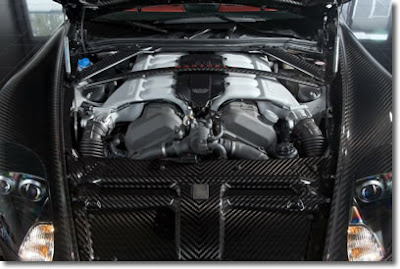
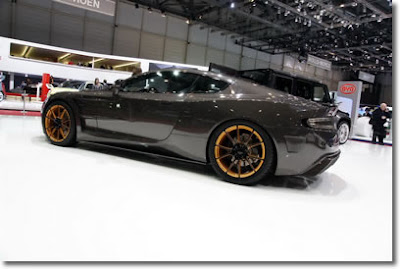
Tailor-made processing and perfect surfaces confirm the superb quality of the MANSORY carbon outfit with the eye-catching gold-texture. The CYRUS aerodynamics components are made of extremely light „prepreg autoclav carbon“ and do not only include wing extensions for the front and back, but also side skirt attachments and linings. At the front axle, a newly designed front skirt with enlarged air inlets provides the optimal ventilation for the twelve-cylinder aggregate. The CYRUS front is visually enhanced with the newly designed carbon bonnet. With its two slotted “power domes” additional fresh air is directed to the front motor. Also at the tail, the refining engineers have invented something extraordinary in order to perfect the visual appearance of the Aston Martin. The newly designed rear skirt with the integrated diffuser emphasises the superior look and provides space for four stainless steel end pipes of the sonorous sport exhaust system.

2010 MANSORY CYRUS based on Aston Martin DBS
Design wheels in XXL

The optimal road grip is provided by the 9x20 and 10,5x21 inch rims in combination with Dunlop Sport Maxx tyres measuring 255/30ZR20 at the front and 295/25ZR21 at the back. The design of the ultra-light forged wheel thereby unites sportiness and elegance and perfectly fills out the wheel houses. In addition, an optimally adjusted coilover suspension lowers the centre of gravity of this noble sports car and renders perfect road holding characteristics.

2010 MANSORY CYRUS based on Aston Martin DBS
Luxurious atmosphere in the MANSORY super sports car

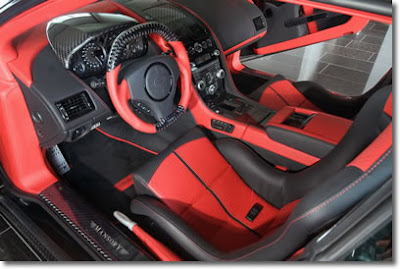
The CYRUS driver will take his seat in a elaborately refined interior which is nothing short of the exterior. The entire modification includes pedals and foot rests made of aluminium as well as exquisite door sills and head rests with embroidered CYRUS logos. MANSORY enhances the interior with a set of tailor-made carbon parts for the dash board and centre console. Generally, the noble interior is only lined with best quality materials. Decoration stitches by expert hand on the dash board and the seats render visual high-lights and perfect the significantly beautiful overall impression of the complete leather equipment. The ergonomically re-designed steering wheel with airbag lies especially well in the hand.

Aston Martin V12 Vantage


Based on the hugely successful Aston Martin V8 Vantage, the V12 Vantage will feature a 6.0-litre V12 engine producing 510 bhp (380 kW / 517 PS), and 570 Nm (420 lb ft) of torque with a top speed of 190 mph (305 km/h) and 0-62 mph (0-100 kp/h) time of 4.2 seconds.

The latest incarnation of the Vantage family has been designed to provide a unique character, appealing to different driver tastes and complementing the other models in the current Aston Martin line-up.

The Aston Martin V12 Vantage has a unique character.
Designed for the focused driver, every component of the Aston Martin V12 Vantage has been honed with pure driving enjoyment in mind. Benefitting from race-developed materials and components, and featuring lightweight carbon fibre; performance and agility have been tuned to perfection.
Visually enticing, the Aston Martin V12 Vantage expresses its performance potential through its purposeful stance created by enhanced aerodynamic and cooling aids optically widening the car, while retaining traditional understated Aston Martin design. Equally inviting, the cosseting interior permits the driver to extract maximum performance ability from the car while also enjoying customary levels of Aston Martin comfort on longer journeys. High levels of power and torque are available at all engine speeds making the Aston Martin V12 Vantage responsive and tractable in any driving situation.

The Performance
The Aston Martin's most powerful engine is fused with its most agile model to produce a truly exhilarating sports car.
The V12 power plant has been intelligently packaged into the Vantage's compact form preserving its perfect proportions. While the external dimensions of the V8 Vantage remain unchanged, the internal front structure has been extensively revised forward of the suspension towers to house the larger engine, brake cooling system, and twin air intake system.
To achieve the power output, the engine features a number of enhancements over the standard 6.0-litre V12 found in the DB9. These include a 'by-pass' engine air intake port that opens up at 5500 rpm, a revised induction system and re-profiled air inlet ports that further improve airflow into the combustion chamber to improve performance.
The naturally aspirated 6.0-litre V12 hand-built engine produces 510 bhp (380 kW / 517 PS) at 6500 rpm and 570 Nm (420 lb ft) of torque giving the driver access to high levels of power and torque at all engine speeds. Unique to the Aston Martin V12 Vantage is a 'Sport' button which allows the driver to choose between two powertrain modes.
The default 'normal' provides a more progressive, throttle response, suited to more everyday situations, such as driving in urban areas, heavy traffic, or in challenging weather conditions. Selecting 'Sport' mode delivers a sharper throttle response together with a sportier exhaust note. This mode is designed for use in more dynamic driving situations where sharper responses are required, extracting the maximum performance from the car.

The Aston Martin V12 Vantage benefits from Aston Martin's class leading all-alloy VH (Vertical Horizontal) architecture: a lightweight bonded platform that provides outstanding strength, rigidity and weight benefits.
Although the V12 engine weighs 100 kg more than the standard car's engine, intelligent use of lightweight materials and components including carbon ceramic brakes, lighter forged aluminium wheels, lightweight inner rear quarter panels and optional lightweight seats have resulted in the overall kerb weight being only 50 kg heavier than its V8 sibling. The ensuing weight distribution provides for balance that is near perfect (51:49).

Exclusively available with a six-speed manual transmission, the gearbox uses a transaxle configuration to aid weight distribution. The Aston Martin V12 Vantage's final drive ratio has also been modified from 3.909:1 to 3.71:1. This allows the Vantage to take full benefit of the high torque levels delivered by the engine to provide both flexibility at lower engine speeds as well as a high top speed of 190 mph.
For a car possessing such racing pedigree, the Aston Martin V12 Vantage surprises with its day to day usability. Featuring a luggage capacity of 300 litres and a traditional tailgate, coupled with ample stowage space to the rear of the seats, touring and trips away are made easy. Gear changes are light and precise requiring minimum effort from the driver and a longer final drive ratio extracts the most from the power and torque available to improve driveability. The communicative chassis provides comfort on long journeys and thrilling feedback with energetic driving.

Near-perfect weight distribution is achieved with a transaxle-mounted gearbox which sees 85% of the car's weight lying between the front and rear axles. Aston Martin engineers have positioned the engine as far back and as low as possible in the car to contribute to the 51:49 weight distribution. Containing the weight within the Aston Martin V12 Vantage's wheelbase results in a low polar moment of inertia, creating a car which has a natural agility.
Superb handling characteristics are at the heart of the Aston Martin V12 Vantage; the rear suspension has been modified, with a more compact dual-rate spring design, in order to accommodate a wider wheel and tyre combination, improving grip and traction. The ride height of the Aston Martin V12 Vantage has also been lowered by 15 mm, while the spring rates have been stiffened by 45% and the anti-roll bars are 15% (front) and 75% (rear) stiffer than the standard car. These measures serve to lower the car's centre of gravity and reduce the amount of roll experienced during cornering, further increasing the Aston Martin V12 Vantage's dynamic capabilities.
The Aston Martin V12 Vantage's diamond-turned 19" alloy wheels are manufactured using a forging process, saving a total of 5 kg, which reduces the overall weight of the car, as well as enhancing both ride and handling characteristics.

The new 10 spoke wheels are clad with wider Pirelli P Zero Corsa tyres which have been specifically designed for the Aston Martin V12 Vantage enabling it to generate the highest cornering forces of any Aston Martin; up to a peak of 1.3g is possible.
The Aston Martin V12 Vantage comes as standard with Carbon Ceramic Matrix (CCM) brakes, providing immense stopping power. Benefitting from carbon fibre's inherent properties, CCM brakes are not only tougher than conventional cast iron discs but also dissipate heat more rapidly resulting in less fade during sustained dynamic driving.
Air ducts positioned within the lower front grille feed air directly onto the discs to aid cooling and optimise braking performance.
The Aston Martin V12 Vantage's CCM discs are 398 mm in diameter at the front and 360 mm at the rear while the brake callipers feature six pistons at the front, four at the rear and have a larger brake pad area compared to the V8 Vantage. The CCM brakes are some 12.5 kg lighter than conventional brakes reducing not only the overall weight of the car but also the unsprung mass specifically. This benefits ride and handling and lower rotational mass helps improve acceleration.
In line with the character of the Aston Martin V12 Vantage, a revised Dynamic Stability Control (DSC) system permits the driver, through three modes of operation, to manage how the system intervenes during more challenging driving situations.
In default operation, the DSC is automatically switched on. Depressing the DSC button for two seconds selects 'track mode' which raises the manner and threshold at which the system intervenes allowing the driver to explore the limits of the car's considerable handling capabilities. Depressing the button for four seconds will switch off DSC completely.

The design
Based on the stunning V8 Vantage originally launched in 2005, the Aston Martin V12 Vantage subtly hints at its sporting intent with its controlled aggression and lower, purposeful stance. It is manufactured at Aston Martin's global headquarters in Gaydon, Warwickshire where all Aston Martins benefit from class leading levels of craftsmanship fused with cutting-edge technology.
Avoiding purely cosmetic changes, each modified panel on the Aston Martin V12 Vantage has been altered to enhance the vehicle's dynamics. Knowledge gained from the N24 race car programme has led to body revisions designed to improve downforce while not increasing the drag coefficient of the car. Each form follows its functional requirements, while also contributing to stunning design - a revised front splitter channels cooling air to the brakes and to the radiator while also producing increased down force. Bonnet louvres remove heat from the engine bay and help increase front-end down force by limiting the built up air pressure under the bonnet. New side sills derived from the N24 race car channel air towards the rear of the car rather than under it, reducing rear-end lift. A more pronounced boot 'flip' and the new rear carbon fibre diffuser work in harmony with a redesigned rear under floor to channel air through the new high-capacity oil cooler and maintain an area of low pressure under the rear of the car producing increased down force and aiding grip.
Complementing the taught exterior, the Aston Martin V12 Vantage's interior hints at the car's dynamic capabilities. The optional carbon fibre and Kevlar composite seats cosset the driver providing support during spirited driving while remaining comfortable on long journeys. Saving 17 kg per car, the seats which are manufactured by a supplier to the motorsport and aviation industries are hand-trimmed by craftsmen at the Gaydon production facility.

The interior of the Aston Martin V12 Vantage provides the ideal environment for the focused driver to extract the very best from every element of the car. The extensive use of high quality materials with exceptional attention to detail placed throughout the cabin results in an unparalleled level of finish. The instrument cluster has been revised with even clearer dials to allow the driver to completely focus on the information being relayed from the car. The door pulls are made from beautifully-prepared carbon fibre where even the carbon weave has been meticulously aligned - a sign of exceptional craftsmanship. Additional light weight materials in the form of Alcantara are used to save valuable weight throughout the cabin. The unique ambience of the Aston Martin V12 Vantage interior beautifully marries the functional requirements of a driver-focussed sports car with the comfort of an everyday practical car.

Aston Martin One-77


The One-77 is Aston Martin's definitive sports car, one that epitomises everything Aston Martin from technology, the hand-craftsmanship of the hand rolled aluminium panels to the attention to detail. A culmination of all the marque's know-how, the Aston Martin One-77 delivers effortless beauty guaranteed to stir the senses with performance potential eclipsing any previous Aston Martin.
With the performance and durability phase of the Aston Martin One-77's intensive development programme soon to commence, the 79th Geneva Auto Salon provides the perfect stage on which to reveal the remarkable engineering, advanced technology and exotic materials that lie beneath the Aston Martin One-77's extraordinary exterior.

Consequently the Aston Martin One-77's structural core is a lightweight and immensely rigid carbon fibre monocoque. Conceived and designed at Aston Martin's Gaydon HQ, the monocoque, or 'tub', has been built in partnership with Multimatic (MTC). As world leaders in carbon composite technology, advanced vehicle analysis and dynamic simulation, MTC brings unrivalled specialist capabilities to the exacting challenge of the Aston Martin One-77 programme.

Employing the classic formula of double wishbones at each corner, the Aston Martin One-77 features inboard suspension front and rear, with pushrods employed to transfer vertical suspension movements to the horizontally mounted spring/damper units. A practice taken directly from racing car design, the main advantages of inboard suspension are a reduction in unsprung weight and the ability to package the suspension components more effectively.

The dampers are fully adjustable and feature advanced Dynamic Suspension Spool Valve (DSSV) technology; a world-first for a road car application. These special valves are state-of-the-art even at the highest levels of motorsport, and use high-precision machined components to enable the shock-absorbing characteristics of the damper to be changed without having to remove them from the car, as is the norm.

Underlining the truly bespoke nature of the Aston Martin One-77, once delivered to its owner, the car's suspension characteristics will be precisely set-up by Aston Martin engineers to suit their exact requirements, from settings suitable for the ultimate long-distance GT, to a machine capable of conquering the Nürburgring Nordschleife.

While functionality and efficiency are paramount in the design and construction of the Aston Martin One-77, so too is aesthetic beauty. To this end every single component has been crafted from the finest materials with absolute attention to detail. From the mesmerising weave of the glossy carbon fibre tub and the abstract, sculptural beauty of the dry sump's oil reservoir, to the unerring precision of the billet machined aluminium suspension mounts, the Aston Martin One-77's rolling chassis is an automotive masterpiece.

Naturally, such a spectacular chassis demands - and gets - an equally exceptional drivetrain. It comes in the form of an immensely potent 7.3-litre, naturally aspirated V12 engine. Thanks to the adoption of a dry-sump oil system the engine is mounted 100mm lower than in any previous V12-engined Aston Martin road car, which helps keep the Aston Martin One-77's centre-of-gravity as low as possible. To further aid agility and endow the Aston Martin One-77 with progressive handling and stable, predictable on-limit behaviour, the engine is also mounted 257mm aft relative to the front wheel centreline. In so doing the front-mid-engined layout shared by all of Aston Martin's current road car range has been taken to a new level.

The Aston Martin One-77's magnificent power unit is an extreme evolution of the 6.0-litre V12 engines fitted to the Aston Martin DBS, DB9 and new V12 Vantage models. Like the collaboration with MTC for the build of the chassis, Aston Martin has chosen a world-leading partner with which to develop the motor: legendary engine builders, Cosworth. It has proved to be the perfect collaboration, as Chris Porritt explains.

Wearing Pirelli P Zero Corsa tyres (255/35 ZR20 front, 335/30 ZR20 rear) developed specifically for the Aston Martin One-77, all 700+bhp is transmitted to the road through the rear wheels via a new six-speed gearbox. Controlled via column-mounted paddles behind the steering wheel, this robotised sequential manual is a new generation of Aston Martin's familiar transmission. Though it is made specifically for the Aston Martin One-77 and features specially strengthened internals to cope with the tremendous power and torque, the lessons learned in its development will ultimately find their way into the company's series production models.

It's a mark of the inherent capabilities of Aston Martin's acclaimed lightweight Carbon Ceramic Matrix brake technology that it has been used as the basis for the Aston Martin One-77's braking system. The internals of the callipers have been re-engineered to transmit less heat from the brake pads into the brake fluid, while the discs themselves have been developed to ensure the maximum possible contact area between the face of the disc and the brake pads for improved stopping power. The Aston Martin One-77's increased performance, special attention has also been paid to brake cooling, as the brakes have less time to cool between bursts of acceleration.

Top speed is confidently predicted to be in excess of 200mph, with a 0-60mph time in approximately 3.5sec.


Aston Martin Volare is an eco-friendly

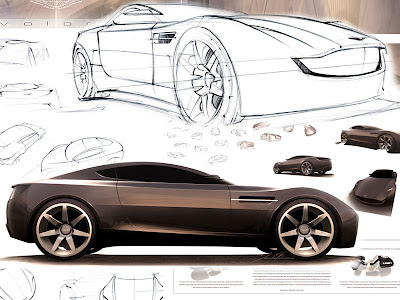
The Aston Martin Volare is a proposal for a next-generation Aston Martin supercar which features an environmentally friendly drivetrain. Aston Martin, like all other supercar manufacturers, faces a dilemma over the next decade; How to dramatically reduce the carbon footprint of their vehicles while also maintaining performance levels which are equal, or superior, to past models.
 
Volare The Aston Martin Sports Car Concept

The Aston Martin Volare is a design study of a two-seater sportscar that combines the typical styling cues of the brand with a fuel-cell powertrain and an interior characterized by the use of eco-friendly materials. The author is Coventry graduate James Trim. The two-seater Aston Martin Volare Concept features a high-power fuel cell stack, located between the front seats, a rear mounted battery pack, and a co-axial electric motor at the front. To aid the Volare’s weight distribution, the two hydrogen storage tanks have been positioned directly above the car’s rear axle. The Aston Martin Volare concept was a vehicle developed by James Trim during his final year at Coventry University studying Automotive Design. He is currently looking for placement opportunities.
Volare The Aston Martin Sports Car Concept 

Speaking about the exterior design of the concept, James Trim explains, "The underlying aim when designing the Volare was to combine present day technologies with the profile of a car that would be instantaneously recognisable as that of an Aston Martin."
Trim said of the design; “Aesthetically the vehicle sharpens up the familiar Aston Martin proportions, with much crisper shoulders and a noticeable ‘floating’ rear deck. The solid front grille was inspired by the older V8 Vantage, while the flexible front fenders can alter their shape to reveal daytime running lights or full headlamps.”
Volare The Aston Martin Sports Car Concept 

The interior uses eco-friendly leather. The materials used in the tanning process are derived from sustainable, farm bred, Mimosa trees. The natural extract from the trees is used to produce the chemicals necessary for farming leather.
This results in an enironmentally-friendly natural process, producing breathable and highly flexible hides. The center console is made from recycled aluminium. The emerging binnacle and Bang & Olufsen twin lens speakers add a touch of theatre to the cabin. "The principle concern being confronted by Aston Martin is the harmful impact their cars are having on the environment. With this in mind, the Aston Martin Volare retains the fantastic sound and outright performance customary with that of a gasoline equivalent.
Volare The Aston Martin Sports Car Concept  

Side from the eco-friendly drivetrain, another dictating factor in the Volare’s design was the desire to create a car which was instantly recognizable as an Aston Martin. It was important that the styling was influenced more by the heritage of the brand, rather than the source of power. On the Volare concept all the hallmarks of Aston Martin are instantly apparent, sleek profile, short front and rear overhangs, trademark grille, powerful rear arches and uncluttered lines.

2020 Aston Martin Twenty Twenty Sports Car concept
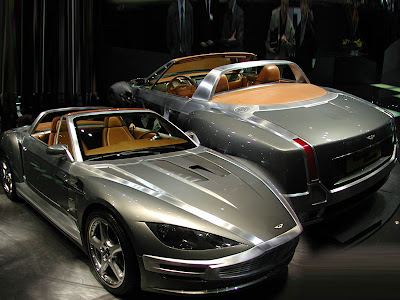
Geneva is one of the world's great auto shows, if for no other reason than it's the place where Italy's design houses and coachbuilders -carrozzerie- annually roll out their latest concept cars. This year, Aston Martin previewed the production version its voluptuous Vanquish (covered elsewhere in this issue). But that wasn't the only Aston on the show floor. The Aston Martin Twenty Twenty concept from 2001 was designed by Giorgetto and Fabrizio Giugiaro of ItalDesign.
2020 Aston Martin Twenty Twenty Sports Car concept

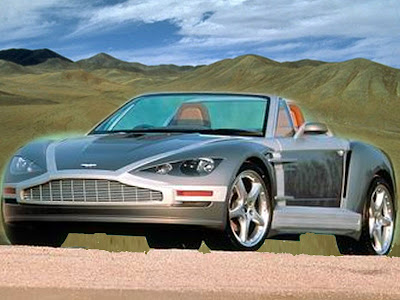
The fully-functioning concept car was intended as a vision for a convertible Aston Martin sports car for the year 2020. Italdesign sprung this amazing car on the unsuspecting visitors to the 2001 Geneva Salon L'Auto. This startling car, based on an early production DB7 Vantage, has a body shape made of exposed extruded aluminium structural elements; body panels made from plastic and carbon fibre are fitted onto it. Thankfully Aston Martin’s current styling trend is headed in a completely different direction to the Twenty Twenty concept.
The brushed aluminium highlighting lines which adorn the Aston Martin Twenty Twenty are an original design feature. However their overuse (especially around the front) gives the concept an unusual, almost comical appearance from some angles. The grille surround almost looks like lipstick.
2020 Aston Martin Twenty Twenty Sports Car concept
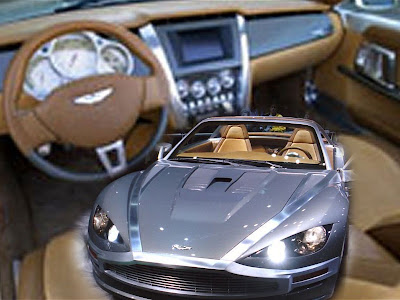
The Twenty Twenty is powered by front mounted, uprated version of the 6 litre V12 from the DB7 Vantage, said to produce 500bhp - visible through a grilled fairing on the bonnet. Initially it appears to be a strict 2 seater, although the rear bulkhead can be removed to provide seating for two children. The rear of the Aston Martin Twenty Twenty (from the doors back) is more appealing with more conservative use of bare aluminium. The soft top is stored in its own special housing that can be slotted into position between the roll-bar and the windscreen, 'Targa' fashion. Notice the fantastic door hinges - derived from the classic Aston wing vent, are both decorative and functional elements.
2020 Aston Martin Twenty Twenty Sports Car concept
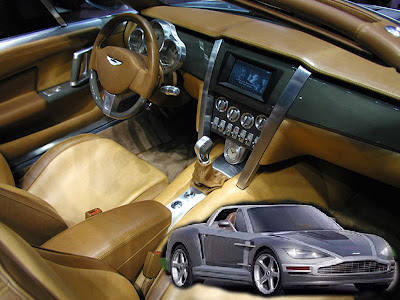
Giorgetto Giugiaro and Aston Martin previously co-operated in 1961, when Carrozzeria Bertone worked on the two-seater DB4GT Jet coupe prototype. And like the original 'Jet' car, the 2020 is destined to remain unique. Aston Martin are believed to have thought the 2020 'interesting', but no plans were ever made even for limited production. As the Twenty Twenty isn't an official Aston Martin design project, don't look for any sort of production version. What about the name? Simple: It's the term commonly used to describe perfect vision. And the Giugiaros clearly have good eyes.
2020 Aston Martin Twenty Twenty Sports Car concept
In March 2004, I received an e-mail claiming the 2020 was for sale, but I have been unable to find any reference to this anywhere. But the car was seen for the first time in the UK at the Goodwood Festival of Speed, June 2005.

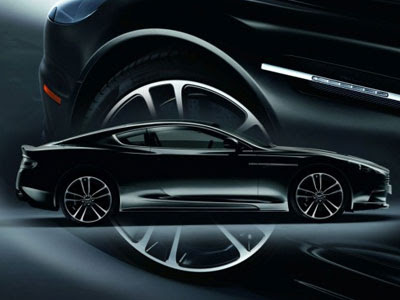
2010 V12 Vantage Carbon Black Aston Martin Sports Car

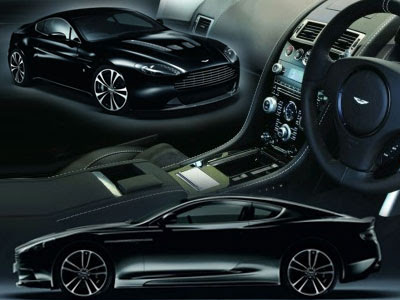
Aston Martin announced the release of two new Aston Martin Carbon Black Special Editions models, the Aston Martin DBS Carbon Black and the Aston Martin V12 Vantage Carbon Black. The Aston Martin V12 Vantage has been one of the marques most desirable models since its introduction in 2009. For 2010 the company is offering a unique 'Carbon Black' special edition version.
2010 V12 Vantage Carbon Black Aston Martin Sports Car
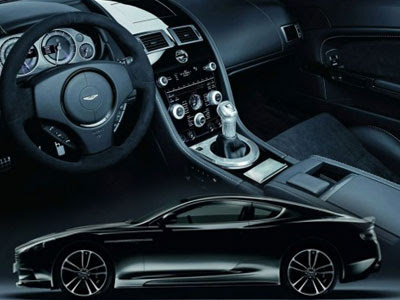
This Carbon Black package is also available for the DBS. The special editions Aston Martin DBS and V12 Vantage Carbon Black will featuring bespoke Carbon Black metallic paint especially formulated with a subtle metallic twist to create a deep rich patina. Each Aston Martin Carbon Black Special Editions will undergo 50 man-hours of hand painting followed by stringent quality checks. For the Aston Martin V12 Vantage side strake has been fashioned from real carbon fibre backed by a black mesh and complimented with gloss black 10 spoke diamond turned alloy wheels. A bright finished grille and front parking sensors complete the exterior detailing.
2010 V12 Vantage Carbon Black Aston Martin Sports Car
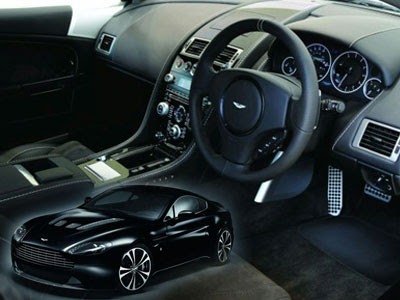
For the interior, owners will be greeted to swathes of Obsidian Black leather highlighted with a contrast silver coarse. Lightweight seats formed from Carbon Fibre and Kevlar saving 17 kg over the standard seat also feature together with Piano black facia trim, centre stack and centre console, anodised black tread plates and unique sill plaques build on the carbon theme. The Aston Martin 700w Premium Audio System is delivered as standard in the V12 Vantage while the DBS boasts the Bang & Olufsen Beosound DBS audio system as standard.
2010 V12 Vantage Carbon Black Aston Martin Sports Car
Customers who order a Carbon Black Edition V12 Vantage will have the opportunity to experience Aston Martin’s renowned Performance Driving Course (UK and Europe only) free of charge which offers a memorable day helping customers to equip themselves with the skill sets to enhance the enjoyment of their Aston Martin on the track.
2010 V12 Vantage Carbon Black Aston Martin Sports Car

The Carbon Black Editions are available to order from the official Aston Martin dealership network with final pricing (expected to be approximately 5% over current base prices) to be confirmed in the New Year.


Aston Martin DB-ONE

Ruben Vela, based in Spain designer The Aston Martin DB-ONE concept,product of independent.
The DB-ONE concept is a proposal for an extreme Aston Martin, with classical proportions combined with ultramodern surfaces resulting in a fresh vehicle which also represents the traditions associated with Aston Martin.
In designing the Aston Martin DB-ONE Vela took the elements essential to Aston Martin, large front grille, long bonnet and side vents and created a car with an immense sense of movement, based around the idea of tension - beginning with the grille and moving back towards the rear of the car.
Aston Martin DB-ONE

The body surfaces of the DB-ONE highlight all the power emanating from the proposed 550 horsepower, 6.0 litre, V12 engine even when static. "Cars aren't static objects, so I belive it's important to show dynamism in the design. And this is much more important when you are designing a super-sports car," says Vela.
The rear of the Aston Martin DB-ONE concept is extremely clean due to the small gap in the tail which hides the taillights and a rear diffuser provides a neat finish to the design.
Although the Aston Martin DB-ONE is an independent design created outside the company and exists only on a computer and as a scale model, Aston Martin's new owners, Prodrive, could certainly take note of a few styling ideas introduced by Vela on the DB-ONE concept.

Aston Martin DB-ONE


Aston Martin Rally GT V8 Vantage

The Aston Martin Rally GT, based on the Aston Martin V8 Vantage, was developed by Aston Martin Racing and automotive engineering specialists Prodrive (see Prodrive P2) for use in rally racing.

The Aston Martin Rally GT was extensively engineered by Prodrive, and like the DBRS9 based on the Aston Martin DB9, the Rally GT is based on a standard road car's chassis. However the Rally GT has been fitted with a Prodrive rollcage, a tuned and more responsive version of the standard car's 4.3 litre V8, and new competition Eibach springs and adjustable EXE-TC dampers. The 6-speed transmission is the same unit found in the road car, but it can be upgraded to a close ratio dog engagement gearbox specifically developed for the Aston Martin Rally GT.