


Showing posts with label Honda. Show all posts
Showing posts with label Honda. Show all posts

2010 Honda has announced today the launch of their new BTCC team and also premiered the special edition Honda Civic Type R MUGEN 200. As you have probably already guessed, the Honda Civic Type R MUGEN 200 will be built in only 200 units and will go on sale in April. In addition to the jam-packed Civic Type R MUGEN with its tweaked 240HP 2.0-liter i-VTEC, of which only 20 units will be sold in the UK at a hefty £38,599 a piece (approximately US$60,300 or €44,400 at today's exchange rates), Honda today announced that it will offer a less hardcore variant of the hot hatch without the performance upgrades.

2010 Honda Civic Sports Car Type R Mugen 200
The Honda Civic Type R MUGEN 200 is powered by the standard 201PS i-VTEC engine and features a number of styling upgrades, plus a Limited Slip Differential. The Honda Civic Type R MUGEN 200 features front and rear bumpers with skirts, various badges and a Limited Edition number plaque. The car comes with a Championship White exterior paint and gloss black door mirrors. The Honda Civic Type R MUGEN 200 sits on 19-inch alloy wheels and the company also plans to offer various chassis tuning parts as an option.

2010 Honda Civic Sports Car Type R Mugen 200
The Honda Civic Type R MUGEN 200 price will be announced at a later date and you'll be able to start ordering yours from March. An enhanced, limited edition Civic Type R featuring exclusive MUGEN equipment will go on sale through Honda dealers in the UK in April.

2010 Honda Civic Sports Car Type R Mugen 200
Inspired by MUGEN Euro’s high-performance Type R, the MUGEN 200 is fitted with unique body parts, wheels and badges to give it stand-out looks. As its name suggests, only 200 of the special Type R models will be made. A range of tuning parts, to further enhance the chassis dynamics of the Type R, will also be available as dealer fit options. The order bank for the MUGEN 200 opens in March, when prices will also be announced.

2010 Honda Civic Sports Car Type R Mugen 200
This limited edition Type R continues the association between Honda (UK) and MUGEN Euro – the Northampton-based subsidiary of Honda’s long standing tuning partner MUGEN. Last year, MUGEN used its 36 years of experience and engineering expertise gained at the forefront of global motorsport, to further develop the Type R, and create the Civic Type R MUGEN of which just 20 units will be made.

2010 Honda Civic Sports Car Type R Mugen 200
From April, a network of Honda dealers will also offer an exclusive range of original MUGEN tuning parts for Type R owners to use to modify their own cars – both used and new. These parts will be available to buy from a number of selected dealers across the UK, and will offer a range of tuning and cosmetic parts, including sports suspension upgrades, lightweight wheels and interior trim.

2010 Honda Civic Sports Car Type R Mugen 200
The limited edition car also celebrates the launch of Honda’s BTCC team for 2010, continuing its long-standing relationship with Team Dynamics. The team will compete in two Civics – which will feature a similar White and Black colour scheme to the MUGEN 200 cars. More details will be announced before the first race of the season, which is at Thruxton on 4 April.

2010 Honda Civic Sports Car Type R Mugen 200

Labels: 2010, Honda, Sports Car
Honda New Small Concept


Honda Siel Cars India Ltd. (HSCI), a leading manufacturer of premium cars in India, unveiled the world premiere of the Honda New Small Concept, a concept model for a new small-sized vehicle.
Thye HSCI also announced plans to begin sales of a new model in 2011 based on this concept model.

For the Honda New Small Concept, a wide platform with a stable center of gravity was adopted to create a highly efficient compact size with seating for five people.
With the "Efficient Energetic Exterior" design, the dynamic design of the Honda New Small Concept with front forward fenders highlight the presence of the vehicle.
The Honda will strive to provide a new small-sized vehicle that is beyond the expectations of customers in rapidly growing markets and offer it at an affordable price by leveraging Honda's global parts sourcing network.
Thye HSCI also announced plans to begin sales of a new model in 2011 based on this concept model.

For the Honda New Small Concept, a wide platform with a stable center of gravity was adopted to create a highly efficient compact size with seating for five people.
With the "Efficient Energetic Exterior" design, the dynamic design of the Honda New Small Concept with front forward fenders highlight the presence of the vehicle.
The Honda will strive to provide a new small-sized vehicle that is beyond the expectations of customers in rapidly growing markets and offer it at an affordable price by leveraging Honda's global parts sourcing network.
Labels: Honda
Honda Pilot Prototype 2008


The prototype conveys the design features of the more boldly-styled 2009 Pilot, which emphasizes authentic SUV styling, clever and more accommodating interior packaging and advanced technologies for safety, fuel efficiency and convenience.
The functional eight-passenger seating, a hallmark of the Pilot, becomes even easier to access in the third row as key dimensions for legroom, cargo and occupant space increase in all seating positions. A redesigned platform allows even more refined handling and ride comfort to exist seamlessly with all-weather and medium-duty off-road capabilities.
The Pilot will feature the Honda-exclusive Advanced Compatibility Engineering™ (ACE) body structure and the most extensive use of high-strength steel in any Honda product to date.

The ACE body structure enhances frontal collision compatibility with vehicles of different sizes and bumper heights. A pedestrian injury mitigation design in the front of the vehicle is designed to help absorb energy in the event of a collision.
A crossover SUV platform underpins the Pilot to provide the best of the car and truck worlds by integrating the refined traits and packaging advantages of a unit body car design with the utility and capability of an SUV design. A V-6 engine introduces the latest generation of Honda fuel-saving Variable Cylinder Management™ (VCM®) technology that operates in 6-cylinder mode for power and 4- and 3-cylinder modes for efficiency, an improvement compared to the existing Pilot's available VCM system that works exclusively in 6- and 3-cylinder modes.

The three rows of seats provide a high degree of adaptability for people and large cargo loads. The first row provides a commanding view of the road from two captains' chairs. A wide center stack and center console form the styling anchor for the interior with a design that emphasizes spaciousness and power, while allowing for convenient access to navigation, entertainment and climate-control systems.
The 60/40 split second row, more spacious, slides further forward for increased ease of access to the third row. The 60/40 split third row, now supplies enough knee room for an above-average-sized adult male to fit comfortably, making the Pilot's third row among the most practical in the industry. Each side of the second and third row independently folds down for cargo. A flat floor is created when the second and third rows are folded down.
Among its numerous accolades, the Honda Pilot has earned Car and Driver Magazine's prestigious "5Best Truck" award on six consecutive occasions (2002-2007).
The functional eight-passenger seating, a hallmark of the Pilot, becomes even easier to access in the third row as key dimensions for legroom, cargo and occupant space increase in all seating positions. A redesigned platform allows even more refined handling and ride comfort to exist seamlessly with all-weather and medium-duty off-road capabilities.
The Pilot will feature the Honda-exclusive Advanced Compatibility Engineering™ (ACE) body structure and the most extensive use of high-strength steel in any Honda product to date.

The ACE body structure enhances frontal collision compatibility with vehicles of different sizes and bumper heights. A pedestrian injury mitigation design in the front of the vehicle is designed to help absorb energy in the event of a collision.
A crossover SUV platform underpins the Pilot to provide the best of the car and truck worlds by integrating the refined traits and packaging advantages of a unit body car design with the utility and capability of an SUV design. A V-6 engine introduces the latest generation of Honda fuel-saving Variable Cylinder Management™ (VCM®) technology that operates in 6-cylinder mode for power and 4- and 3-cylinder modes for efficiency, an improvement compared to the existing Pilot's available VCM system that works exclusively in 6- and 3-cylinder modes.

The three rows of seats provide a high degree of adaptability for people and large cargo loads. The first row provides a commanding view of the road from two captains' chairs. A wide center stack and center console form the styling anchor for the interior with a design that emphasizes spaciousness and power, while allowing for convenient access to navigation, entertainment and climate-control systems.
The 60/40 split second row, more spacious, slides further forward for increased ease of access to the third row. The 60/40 split third row, now supplies enough knee room for an above-average-sized adult male to fit comfortably, making the Pilot's third row among the most practical in the industry. Each side of the second and third row independently folds down for cargo. A flat floor is created when the second and third rows are folded down.
Among its numerous accolades, the Honda Pilot has earned Car and Driver Magazine's prestigious "5Best Truck" award on six consecutive occasions (2002-2007).
Labels: Honda
Honda CR-Z Concept


The 2009 Honda CR-Z Concept, displayed at the Tokyo Motor Show, is the most recent prototype of a compact, agile coupe using Honda's IMA technology. When the production version goes on sale in the UK in the summer of 2010, it will be the world's first sports hybrid car, and the first ever petrol-electric vehicle to employ a 6-speed manual transmission.
Labels: Honda
Honda Skydeck Concept


 The Honda Skydeck Concept, an innovative 6-seater hybrid MPV.
This is still a design study, but is a great example of how Honda's IMA technology can be placed in a range of different cars for different needs.

The Honda Skydeck Concept the practicality of a conventional MPV, many of the hybrid system components - including the high power battery - are housed in the car's centre tunnel (rather than behind the rear seats or under the floor, as with previous production hybrids).
This allows for greater cabin space, and the room for three rows of two seats. It also gives a lower centre of gravity.

The Honda Skydeck Concept the practicality of a conventional MPV, many of the hybrid system components - including the high power battery - are housed in the car's centre tunnel (rather than behind the rear seats or under the floor, as with previous production hybrids).
This allows for greater cabin space, and the room for three rows of two seats. It also gives a lower centre of gravity.
Labels: Honda
Honda Small Hybrid Sports Concept


Honda Small Hybrid Sports Concept, a design study model, demonstrates a unique fusion of advanced environmental technology, exciting styling and fun-to-drive characteristics.
The Small Hybrid Sports Concept is conceived around a front-wheel drive, small car platform and is powered by a Honda IMA 4-cylinder petrol/electric hybrid system driving through a CVT transmission. It explores the idea that a car can have a low environmental impact yet still deliver all the driving enjoyment expected of a compact sports car.
The aerodynamic design is characterised by curvaceous and contoured surfaces contrasting with sharp "folded" edges. The short front and rear overhangs, together with wheelarches that wrap tightly around large wheels, further enhance the dramatic looks of this sports coupe. An accentuated, arrow-like nose features a full width air intake with Civic family overtones. This sweeps forward into a distinct protruding centre section complete with 'H' logo.

The Concept model's fluid lines are created by a steeply raked windscreen which extends back above the occupants' heads where it meets a one piece glass roof. This in turn flows rearwards to give the car its fastback styling, terminating in a distinctive and futuristic 3D floating glass design - a concave element which forms an additional vertical window. At its base, further distinction is provided by a 'floating' LED tail light unit that stretches across the full width of the car. At its centre, the glass panel extends downwards and contains an illuminated 'Small Hybrid Sports' name plate.
The Hybrid Sports Concept is equipped with 165/60 section tyres mounted on 20-inch distinctive rims. Their dimension supports low rolling resistance without compromising sporty driving.
Compact external dimensions lend themselves to nimble, agile performance on the road and help to ensure a good power to weight ratio. 4000 mm in length, 1270 mm tall and 1760 mm wide, and the 2350 mm wheelbase, in conjunction with a sports suspension, delivers stable and predictable handling characteristics.
The body is particularly aerodynamically efficient and compact. Rear-facing digital cameras take the place of conventional door mirrors.
The Small Hybrid Sports Concept is conceived around a front-wheel drive, small car platform and is powered by a Honda IMA 4-cylinder petrol/electric hybrid system driving through a CVT transmission. It explores the idea that a car can have a low environmental impact yet still deliver all the driving enjoyment expected of a compact sports car.
The aerodynamic design is characterised by curvaceous and contoured surfaces contrasting with sharp "folded" edges. The short front and rear overhangs, together with wheelarches that wrap tightly around large wheels, further enhance the dramatic looks of this sports coupe. An accentuated, arrow-like nose features a full width air intake with Civic family overtones. This sweeps forward into a distinct protruding centre section complete with 'H' logo.

The Concept model's fluid lines are created by a steeply raked windscreen which extends back above the occupants' heads where it meets a one piece glass roof. This in turn flows rearwards to give the car its fastback styling, terminating in a distinctive and futuristic 3D floating glass design - a concave element which forms an additional vertical window. At its base, further distinction is provided by a 'floating' LED tail light unit that stretches across the full width of the car. At its centre, the glass panel extends downwards and contains an illuminated 'Small Hybrid Sports' name plate.
The Hybrid Sports Concept is equipped with 165/60 section tyres mounted on 20-inch distinctive rims. Their dimension supports low rolling resistance without compromising sporty driving.
Compact external dimensions lend themselves to nimble, agile performance on the road and help to ensure a good power to weight ratio. 4000 mm in length, 1270 mm tall and 1760 mm wide, and the 2350 mm wheelbase, in conjunction with a sports suspension, delivers stable and predictable handling characteristics.
The body is particularly aerodynamically efficient and compact. Rear-facing digital cameras take the place of conventional door mirrors.
Labels: Honda
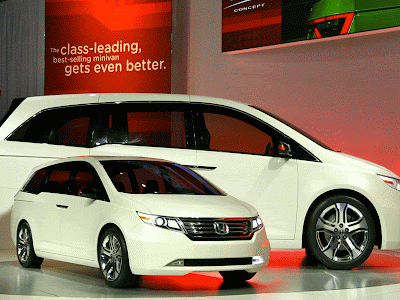
January 26th, 2010 Honda has confirmed that it will show the next generation of its Odyssey minivan at the Chicago Auto Show on February 2010. Honda today gave us the first look at the next-generation of its award-winning Odyssey minivan with the new Honda Odyssey Concept, which is on display at the 2010 Chicago Auto Show, introduces a sleek and distinctive exterior styling direction for the next generation of the industry's best-selling minivan, set to debut this fall, American Honda Motor Co., Inc..
2011 Honda Odyssey Minivan Concept
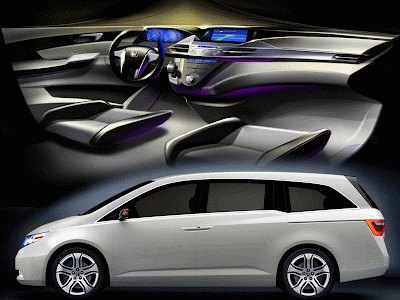
The Odyssey Concept dramatically departs from conventional minivan styling with its low and wide stance, highlighted by a "lightning-bolt" beltline that further distinguishes the vehicle's profile. Compared to the current Odyssey, the Concept's slightly lower roofline (-1.0 inch) and wider stance (+1.4 inch) contribute to a sleeker, stronger and more dynamic presence with improved aerodynamics that help increase fuel economy. Forthcoming improvements to the production Odyssey's interior are designed to further enhance the current model's accommodating space for people and cargo.

2011 Honda Odyssey Minivan Concept
The steeply raked front and rear roof pillars, unique side-glass profile, chamfered roof line, and tapered rear cabin shape combine to create a dynamic and distinctive appearance from any perspective. The lightning-bolt beltline dives toward the rear of the vehicle emphasizing the new Odyssey's sporty appearance while enhancing outward visibility for third-row passengers. Aggressive body-to-wheel proportions reduce the perception of vertical height common to most minivan designs. Fender flares further accent the vehicle's securely planted and stylish persona. The concept vehicle's projector beam headlights, LED taillights and form-fit fog lights further heighten the sophisticated quality of the design.

2011 Honda Odyssey Minivan Concept
Enhanced aerodynamics and advanced powertrain technologies will contribute to the next-generation Odyssey's increased fuel efficiency. The all-new 2011 Odyssey is expected to achieve an EPA-estimated fuel economy rating(1) of 19 city/28 highway miles-per gallon on select models (preliminary estimate determined by Honda).

2011 Honda Odyssey Minivan Concept
Currently in its third generation, the Odyssey's unique array of features, including its superior driving dynamics, 3rd-Row Magic Seat(R) and efficient i-VTEC(TM) V-6 engine with three-mode Variable Cylinder Management(TM) (available) all combine to offer a sophisticated environment with room for up to eight people (seven on Odyssey LX). The Odyssey has been America's best-selling minivan(2) since 2008 and is produced exclusively in Alabama by Honda Manufacturing of Alabama (using domestic and globally sourced parts). Both the concept and production vehicles, along with all development activity for the 2011 Odyssey, are being designed at Honda R&D Americas in Torrance, California, and Raymond, Ohio.

2011 Honda Odyssey Minivan Concept
The Odyssey has won numerous awards and critical acclaim. Recent accolades include the Edmunds.com 2010 "Top Recommended" minivan award, U.S. News and World Report 2010 "Best Minivan for the Money" award, Automotive Lease Guide 2010 "Best Minivan for the Money," the Kelley Blue Book award as one of the ten "Best New Family Vehicles of 2009" and "2009 Best Resale Value Award" in the van category, which recognizes vehicles that are expected to have segment-leading resale value after five years of ownership.

2011 Honda Odyssey Minivan Concept
Labels: 2011, Concept Car, Honda
2010 Honda Racing HSV-010 Super GT
2010 Honda Racing HSV-010 Super GT
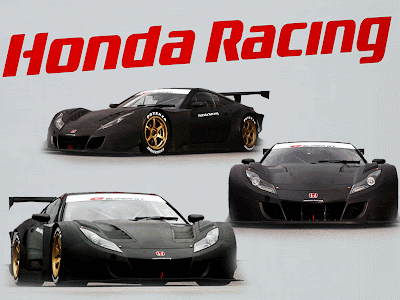
2010 Honda Racing HSV-010 Super GT
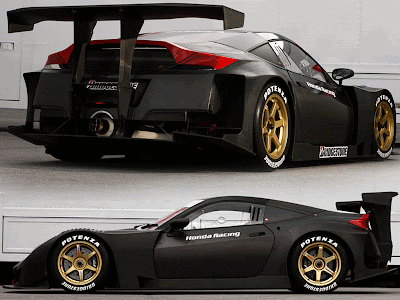
2010 Honda Racing HSV-010 Super GT
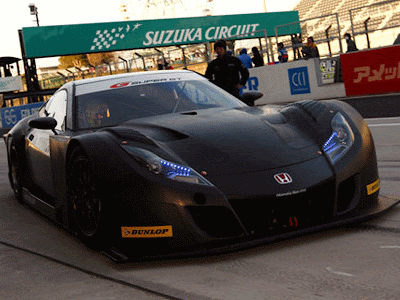
2010 Honda Racing HSV-010 Super GT

2010 Honda Racing HSV-010 Super GT
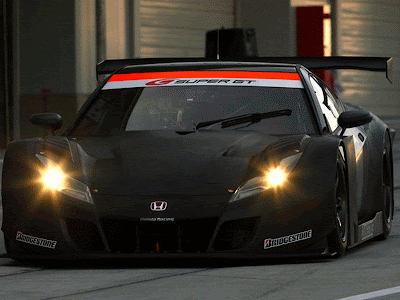
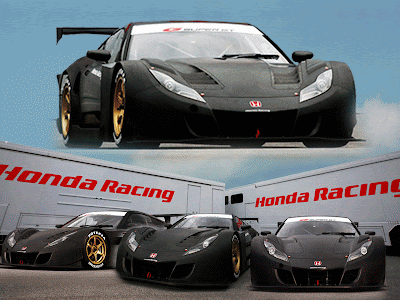
Honda Motor Co., Ltd. introduced the Honda HSV-010 GT, which will compete in the GT500 class of the 2010 Super GT Series.Honda HSV-010 GT Technical Specifications :
- Dimensions
* Length: 4675 mm
* Width: 2000 mm
* Vehicle weight: 1100+ kg
- Engine
* Engine name: HR10EG
* Configuration: Liquid-cooled, naturally aspirated, longitudinal V8
* V angle: 90°
* Valve train: Gear-driven DOHC - 2 intake and 2 exhaust valves per cylinder
* Displacement: 3397 cm3
* Bore x stroke: 93.0 x 62.5 mm
* Maximum output: 500 PS (370 KW)
* Maximum torque: 392 Nm
* Throttle control system: Mechanical
* Fuel supply system: Programmed fuel injection system (Honda PGM-FI)
* Fuel: Lead-free premium gasoline
* Lubrication: Dry sump
- Powertrain
* Transmission mechanism: Constant mesh
* Transmission shifting method: Steering paddle shifter
* Steering system mechanism: Rack and pinion system with electric power steering (EPS)
- Tires
* front: 330/40R18
* rear: 330/45R17
- Brake type and mechanism: Hydraulic ventilated disc system
- Suspension system: Double wishbone
- Stabilizer: Torsion bar
Labels: 2010, Honda, Racing Car
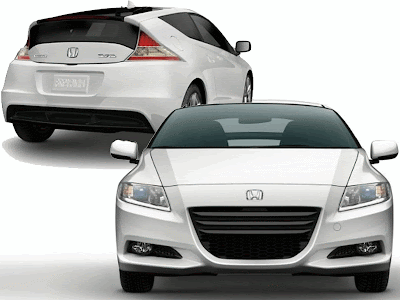
2011 CR Z Honda Hybrid Sport Car Coupe
The all-new 2011 Honda CR-Z sport hybrid coupe, making its U.S. production debut at the North American International Auto Show in Detroit, introduces sleek styling and sporty handling to the hybrid segment, American Honda Motor Co., Inc., announced today.
John Mendel, executive vice president of sales for American Honda, said "The CR-Z is a personal sport hybrid coupe for people with a spirit of adventure and an elevated sense of responsibility toward the environment, it's the first hybrid designed to maximize style and fun, in addition to efficiency and economy."

2011 CR Z Honda Hybrid Sport Car Coupe
Set to go on sale late summer in the U.S., the CR-Z is powered by a 1.5-liter i-VTEC engine with Honda's compact and lightweight Integrated Motor Assist (IMA) hybrid-electric system. The two-passenger CR-Z introduces a new three-mode drive system that allows the driver to select between Sport, Econ (Economy) and Normal driving modes. The two trim levels include the well-equipped CR-Z and the feature-rich CR-Z EX. A six-speed manual transmission is standard equipment and a Continuously Variable Transmission (CVT) is available. Standard features on the CR-Z include Vehicle Stability Assist, an AM/FM/CD/USB audio system with six speakers, automatic climate control, power windows and door locks, remote entry, cruise control, and more. The CR-Z EX adds, High-Intensity Discharge (HID) Headlights with Auto-On/Off, fog lights, a 360-Watt AM/FM/CD premium audio system with seven speakers including subwoofer, Bluetooth® HandsFreeLink®, perforated leather-wrapped steering wheel, and more. The CR-Z EX is available with the Honda Satellite-Linked Navigation System1 with voice recognition.
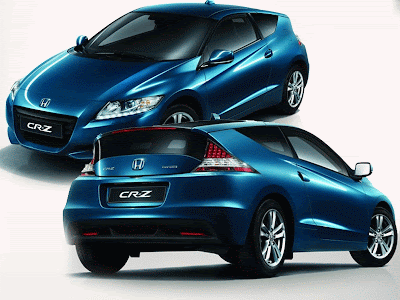
2011 CR Z Honda Hybrid Sport Car Coupe
The foundation of the 2011 Honda CR-Z Sport Hybrid Coupe’s hybrid powertrain is a 4-cylinder, 16-valve, single overhead cam engine with “intelligent” Variable Valve Timing and Lift Electronic Control (i-VTEC) that receives additional power from the IMA system’s DC brushless electric motor. The system delivers a combined peak output of 122 horsepower2 at 6,000 rpm and 128 lb-ft. of torque2 at 1,000 to 1,500 rpm (123 lb-ft on CVT-equipped models). The Honda CR-Z Sport Hybrid Coupe standard six-speed manual transmission is engineered for optimal acceleration performance in gears one through five and for optimal fuel economy in sixth gear.

2011 CR Z Honda Hybrid Sport Car Coupe
The CR-Z's three-mode drive system allows the driver to select between individual modes of performance for Sport, Normal and Economy driving styles. The system is activated via three backlit buttons to the left of the steering wheel.
The Sport mode enhances multiple vehicle systems for performance including the engine throttle responsiveness, electric power steering effort and the electric motor power assist. The inner ring of the tachometer illuminates red when the vehicle is in Sport mode.
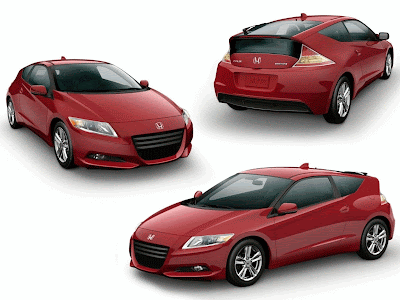
2011 CR Z Honda Hybrid Sport Car Coupe
During Econ mode operation, the engine's responsiveness is tuned for optimal economy, the electric motor assist gives priority to fuel efficiency and the air conditioning system can reduce its overall load on the engine. The inner ring of the tachometer transitions between blue and green when the vehicle is in Econ mode, with the green representing more ecological driving.
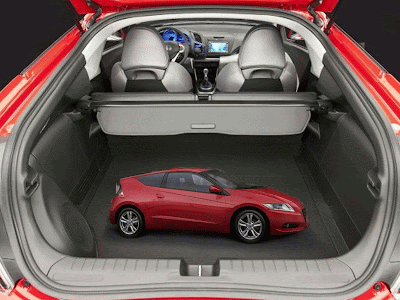
2011 CR Z Honda Hybrid Sport Car Coupe
Normal mode provides standard settings for steering, engine response, motor assist and air conditioning. Similar to Econ mode, the tachometer ring transitions between blue and green when the vehicle is in normal mode, with the green representing more ecological driving. Like the Honda Insight, the CR-Z offers an Eco Guide and Eco scoring feature to help drivers track progress of efficient driving styles.
Labels: 2011, Honda, Hybrid Car, Sport Car Coupe
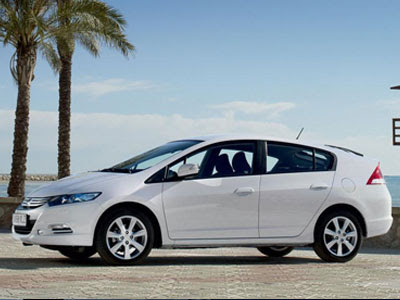 2010 Honda Insight EU Version
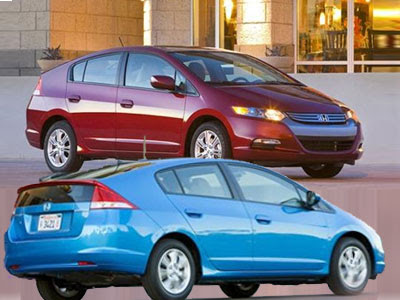
Although the Honda Insight design team started with a blank piece of paper - in that this was a brand new model with no history - they faced many challenges in creating the exterior appearance of the Honda Insight.
On the one hand, as a low emission hybrid car, it had to express environmental credentials - it had to look like a 'green' car - but on the other hand it had to appear dynamic and fun to drive; part of Honda's key design principles. Above all, in line with the positioning of Honda Insight, the design had to appeal to a broad range of people.
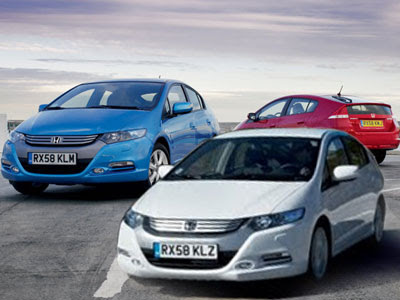 2010 Honda Insight EU Version
While the 'greenness' of the car may have challenged the sporty direction of the overall design, in some areas it actually helped the dynamic cause. Because the newly-developed IMA system is more compact, it meant the nose of the car could be shorter, creating a snubbed, more aggressive look to the front end.
Another important factor that led (and to some extent restricted) the exterior design was the bodystyle itself. To appeal to as many people as possible, a 5-door layout was chosen, and this brought its own challenges, particularly when optimising the aerodynamics of the car, and creating enough headroom for passengers in the rear.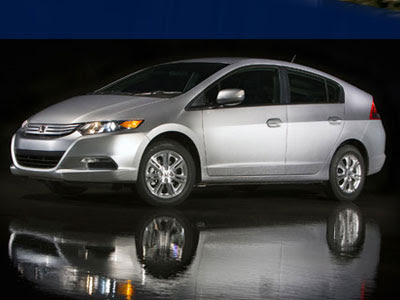
2010 Honda Insight EU Version
The Insight adopts slim, projector-style headlights in a 4-light cluster. The headlight's low beam has blue detailing, and the indicators are located in the lower bumper face.
Firstly, the line from the centre of the roof to the top of the boot lid is at the optimum angle for controlling the flow of air off the top of the car, with minimum turbulence. Also, you'll notice that the top half of the body tapers in towards the rear of the car, which also helps the air flow travel smoothly over the car. Stable air flow over this section helps the car pass through the air with minimal drag.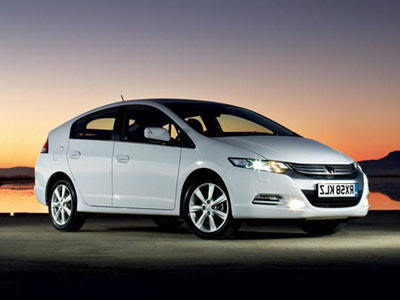
2010 Honda Insight EU Version
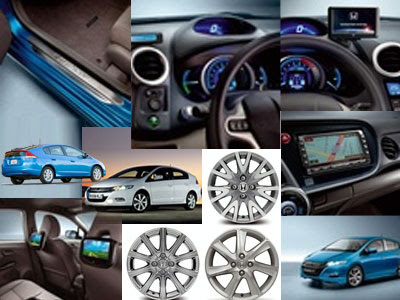
"The concept for the main shape of the car is called 'Aero Athlete'," says Mr Minowa. "It reflects a sporty, lean body with no fat, the tension of muscles and nothing unnecessary added." The Honda Insight is fitted with a seven-spoke alloy design, to enhance the sporty image of the car.
All Honda Insight grades are equipped with Honda's Vehicle Stability Assist (VSA) system, designed to assist the driver in maintaining control during cornering, acceleration and sudden manoeuvres by applying braking to the right or left hand wheels as necessary and managing the engine torque systems.
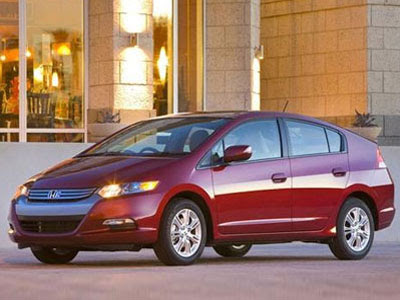 2010 Honda Insight EU Version
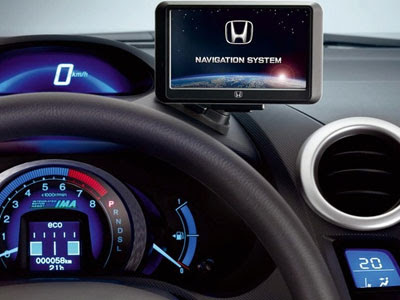
Honda's IMA hybrid system concept is now 10 years old - having made its debut in the original Insight back in 1999. IMA stands for Integrated Motor Assist, which consists of a low-friction 1.3 litre engine that serves as the primary power source, an ultra thin electric motor, a lightweight and compact battery with a continuously variable transmission.
This system has been used successfully in not only the Honda Insight, but also the Civic IMA, and its successor, the Civic Hybrid. Over the years the system has evolved and become smaller, more lightweight and less expensive to produce, and the latest version in the new Honda Insight is the most advanced IMA technology introduced by Honda to date. The fifth generation IMA system in the Insight is 24% more compact than the fourth generation system freeing up space for luggage.
2010 Honda Insight EU Version
The engine itself is new, but is based heavily on the 1.3-litre from the Civic Hybrid. This modified i-VTEC unit from the Civic Hybrid has been further enhanced with lessons learned from the Jazz incorporated to improve fuel economy. The low friction, pattern coated piston design has been combined with a new catalyst design to further optimise this already highly efficient power unit. These measures along with a further stabilised combustion process give a fuel economy improvement for the engine alone of 2% on what is already a highly-efficient unit.
 2010 Honda Insight EU Version
When combined, the motor and engine produce lively performance ideal for urban environments, with good throttle response and acceleration times to rival conventional 1.6-litre petrol cars with automatic gearboxes. The Honda Insight reaches 100 km/h from a standing start in 12.6 seconds, and goes on to a top speed of 186 km/h.
2010 Honda Insight EU Version
Using a CVT transmission in a hybrid provides smooth and predictable gear transitions and helps keep the IMA system operating in its most efficient range. In the Insight, an evolution of the high-torque CVT unit from the Honda Civic Hybrid is used.
This version of CVT has a lower final drive gear ratio (4.200 from 3.937), which results in faster-acting initial acceleration performance.
Labels: 2010, Honda, Hybrid Car, Sports Car
Subscribe to:
Posts (Atom)


